Managing Diabetes with Daily Tracking
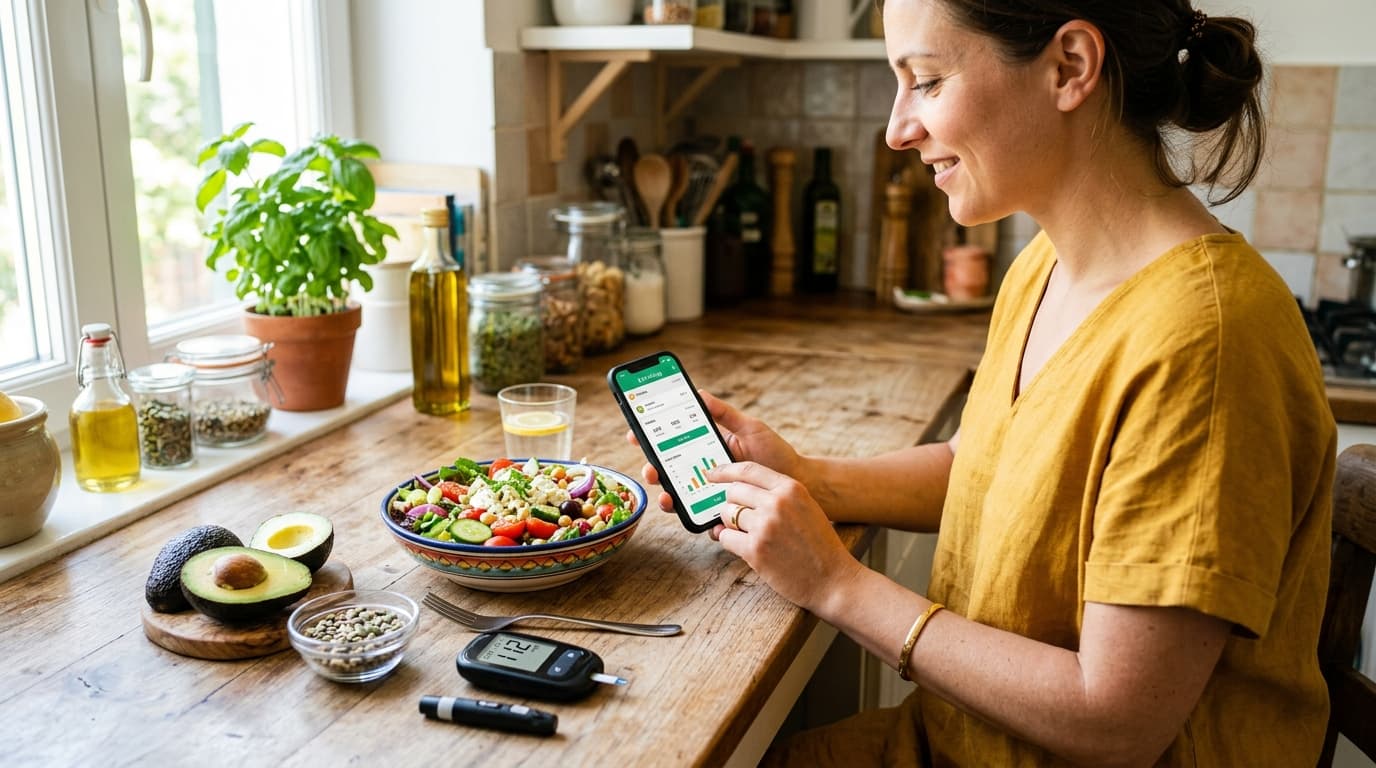
When newly diagnosed with diabetes or prediabetes, many people feel like their life has suddenly been reduced to numbers on a screen. Every meal feels like a test, and every high reading feels like a personal failure.
Let's dispel that myth right away: a blood sugar number is not a moral judgment on your character.
It is simply real-time metabolic feedback. When you learn to view your readings with curiosity rather than guilt, daily tracking transforms into your greatest superpower.
The Power of the "Post-Meal Walk" Insight
One of the greatest moments of empowerment for a diabetic patient comes from seeing the immediate physiological impact of light movement.
When you eat a carbohydrate-rich meal, your blood glucose naturally climbs as starch is broken down into simple sugars. Normally, the body requires insulin to transport that glucose into cells. However, when skeletal muscles contract during walking, they activate GLUT4 glucose transporters independently of insulin!
In our clinical coaching:
- Patients who sit on the couch after dinner frequently experience post-meal spikes of 180 to 210 mg/dL.
- Those same patients, eating the exact same meal but taking a leisurely 15-minute walk around the block immediately afterward, often see their peak glucose stay under 140 mg/dL.
Seeing that direct cause-and-effect in your digital logbook is life-changing.
What to Track for Meaningful Progress
1. The Fasting Baseline
Checked immediately upon waking. This reveals nocturnal liver glucose production and informs your physician about foundational basal medication needs.
2. Selective Postprandial Checks
You don't need to prick your finger after every snack. Choose one main meal each day (e.g., lunch on Monday, dinner on Tuesday) and test two hours after your first bite.
3. Contextual Tags
Note simple flags in your app: *"High stress day"*, *"Poor sleep"*, *"15-min walk"*, *"Restaurant meal"*. When you spot spikes later, the reason will be obvious.
Dealing with Diabetes Burnout
If you feel overwhelmed, talk to your care team:
- It is okay to take a "structured tracking break" where you scale down to fasting checks only.
- Celebrate steady HbA1c improvements over months rather than obsessing over day-to-day fluctuations.
Takeaway: Diabetes management is a marathon of consistency, not a sprint of perfection.